Midnight Frequencies: The Science and Seduction of Music That Feeds on Fear
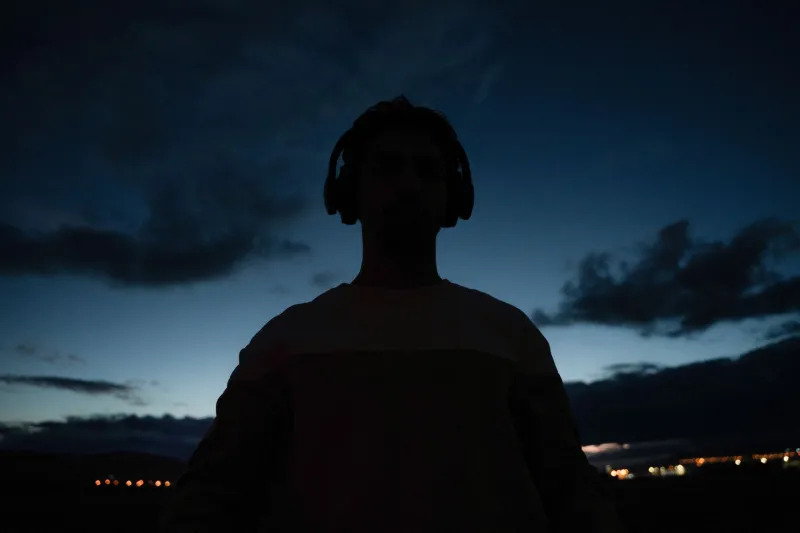
Somewhere between 11:47 p.m. and 2:00 a.m., a transformation occurs in America's listening habits. The cheerful playlists of the afternoon dissolve. The motivational anthems of the commute go quiet. What replaces them — according to aggregated Spotify and Apple Music behavioral data — is something altogether different: slower tempos, lower registers, minor keys, and vocals that seem to emerge from the dark rather than from any human throat.
This is not a coincidence. It is, researchers argue, one of the most revealing psychological phenomena of the streaming age.
The Architecture of Unease
To understand why certain music unsettles us, one must first understand what the human nervous system is actually responding to. Dr. Leanne Marsh, a cognitive musicologist based in Chicago, has spent the better part of a decade studying emotional responses to what she terms "shadow music" — compositions specifically engineered, whether intentionally or not, to provoke anxiety, dread, or melancholy.
"The brain doesn't distinguish cleanly between a perceived threat and a musical simulation of one," she explains. "When you hear a tritone interval — historically called diabolus in musica, the devil in music — your amygdala registers something analogous to a warning signal. The body begins preparing for a response it never has to complete. That suspension, that unresolved tension, is where the emotional power lives."
The tritone is only one tool in the composer's arsenal of discomfort. Dissonant chords that refuse resolution, tempos mimicking an elevated heartbeat, sudden dynamic shifts from near-silence to overwhelming sound — each of these triggers what Marsh calls "the anticipatory dread loop," a neurological state in which the listener is perpetually bracing for an impact that may never arrive.
It is, in essence, the sonic equivalent of standing at the edge of a dark staircase and listening.
Why We Choose the Dark
The more pressing question is not how this music works, but why millions of Americans actively seek it out — particularly during those hours when the rational mind is most fatigued and the subconscious most exposed.
Clinical psychologist Dr. Aaron Stiles of Boston University offers a counterintuitive answer: control.
"People who experience chronic anxiety, low-grade depression, or unresolved grief often find that dark music gives them a structured container for feelings they cannot otherwise manage," he says. "When you choose to listen to something that frightens or saddens you, you are exercising agency over an emotional state that ordinarily feels uncontrollable. The darkness is still there — but now you are the one who invited it in."
This dynamic appears to intensify dramatically after midnight. Sleep deprivation lowers inhibitory processing in the prefrontal cortex, the brain's regulatory center, effectively thinning the wall between conscious thought and raw emotional experience. Music that might feel merely melancholy at noon can feel genuinely haunting at 1:00 a.m. — not because the music has changed, but because the listener has.
Streaming platforms have quietly taken note. Internal research from multiple major platforms has confirmed that user-generated playlists tagged with descriptors like "dark," "eerie," "haunting," and "late night" spike in plays between the hours of midnight and 3:00 a.m. across nearly every demographic in the United States, with the sharpest increases among adults aged 25 to 44.
The Voices That Haunt Us
Among the specific musical elements that appear most consistently in late-night listening data, vocal timbre stands apart. Listeners demonstrate a measurable preference, after midnight, for voices that are breathy, hollow, or processed in ways that suggest distance — as though the singer is not quite present, not quite of this world.
This preference aligns with what audio engineers call "the uncanny valley of voice" — a sonic space where a human voice has been altered just enough to trigger unease without becoming unrecognizable. Think of the reverb-drenched whispers that populate ambient dark-folk recordings, or the pitch-shifted harmonics layered beneath certain indie artists' vocals, creating the impression of a second, uninvited presence.
"There's a reason ghost stories have always been told in a low voice," observes Nashville-based sound designer Marcus Ellroy, who has worked on film scores and immersive horror experiences. "Volume is associated with safety, with community, with daylight. Quiet is associated with isolation and with things that don't want to be heard. When you build a vocal that seems to be hiding itself, you're encoding that primal association directly into the music."
The Ritual of the Late-Night Listen
What emerges from the intersection of data, psychology, and testimony is a portrait of a deeply American ritual — one that plays out in darkened bedrooms, on long empty highways, and in the glow of laptop screens long after the rest of the household has gone to sleep.
For many listeners, the midnight playlist is not entertainment in any conventional sense. It is something closer to a private ceremony: an appointment kept with the parts of the self that daylight hours require us to suppress. The fear, the grief, the nameless anxiety that accumulates through ordinary life — these things do not disappear at sunset. They wait.
And somewhere in the architecture of a dissonant chord, in the hollow reverb of a voice that sounds as though it is calling from the far side of something, those waiting feelings find a shape they can inhabit.
The darkness, it turns out, has always had its own soundtrack. We are only now beginning to understand why we keep turning up the volume.


