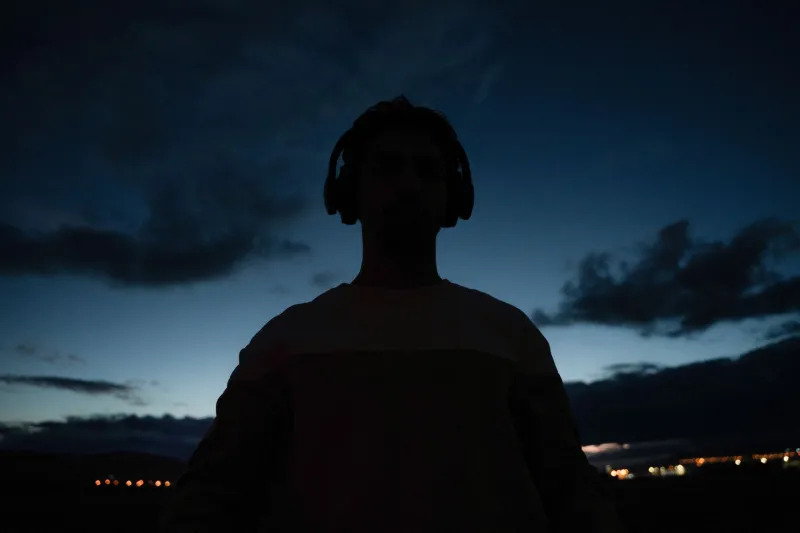
The Ones Who Vanished: Cold Cases That Left America's Heartland Haunted

Photo by Photo by chmyphotography on Unsplash on Unsplash
There is a particular species of horror that has nothing to do with monsters or violence — at least, not the kind that can be named and confronted. It is the horror of the inexplicable: of a door left open, a car found idling on an empty road, a bed that was slept in and then, one morning, was not. It is the horror of a person-shaped absence that refuses to be filled.
Across the United States, thousands of missing persons cases remain officially unsolved. The majority of them will never receive a documentary, a true crime podcast episode, or a segment on cable news. They exist instead in the quieter, more persistent register of community memory — in the photographs still taped to telephone poles years after the ink has faded, in the questions that families carry into old age without answers.
What follows is an account of several such cases: disappearances that have resisted explanation, defied investigation, and left behind an atmosphere of unresolved dread that is, in its own way, a form of haunting.
The Girl Who Walked Into the Corn — Harlan County, Nebraska, 1987
In the late summer of 1987, seventeen-year-old Darlene Pruett left a Friday night bonfire on the outskirts of Alma, Nebraska, telling two friends she was going to find a quieter spot to sit. The field bordering the property was full of late-season corn, standing nearly eight feet tall in the August heat. Darlene walked into it.
She did not walk out.
Search teams combed more than four hundred acres over the following two weeks. No remains, no clothing, no physical evidence of any kind was ever recovered. Her friends, interviewed separately, gave accounts that were consistent with one another and with the benign explanation of a teenager wanting a moment alone. There was no argument, no distress, no indication that anything was wrong.
"People around here have their own theories," says a longtime Alma resident who asked not to be identified. "Some of them are rational and some of them aren't. But nobody has a real answer. That's what stays with you. There's no answer."
Darlene's case remains open. She would be fifty-five years old today.
A Family Erased — Outside Bisbee, Arizona, 2003
The disappearance of the Calloway family — Raymond, 44; his wife Patricia, 41; and their two children, ages nine and twelve — is among the most disquieting cases in the Arizona Department of Public Safety's unsolved files.
On a Thursday evening in March 2003, the Calloways were reported missing by Patricia's sister, who had arranged to meet them for dinner in Tucson. When she arrived at their home to collect them, she found every light in the house burning, dinner partially prepared on the stove, and the family's two vehicles parked in the driveway. There were no signs of struggle. The family dog was secured in the backyard. The television was on.
No member of the Calloway family has ever been found.
"Cases involving entire families are extraordinarily rare," notes a former investigator who worked the case and spoke on condition of anonymity. "The logistics of making four people disappear simultaneously — without any of them leaving behind a trace, without a single witness — those logistics are almost impossible to account for. We exhausted every conventional explanation."
The Calloway home was sold in 2009. Neighbors say the new owners moved out within a year.
The Lake That Gives Nothing Back — Cass County, Minnesota, 2011
In October of 2011, forty-one-year-old ice fisherman Gary Tordsen drove to a remote section of Ten Mile Lake in Cass County for what his wife described as a routine solo trip. His truck was discovered four days later, still parked at the access point. His equipment was missing. His phone, wallet, and keys were on the passenger seat.
What makes the Tordsen case particularly difficult to classify is the testimony of a retired couple who were camping approximately a mile from the access point on the night of Gary's disappearance. They reported hearing what the husband described as "a conversation in the dark" — two voices, neither of which they could identify, moving along the tree line sometime after midnight. The voices stopped. There were no further sounds.
The lake was searched multiple times by divers and sonar equipment. Nothing was found.
"Gary didn't drink. He knew that lake better than most people know their own backyards," his wife, Susan, said in a 2019 interview with a local Minnesota publication. "I've stopped trying to find a rational explanation. I'm just trying to find him."
What the Silence Means
Each of these cases is, on its surface, a law enforcement failure — an investigation that arrived at no conclusion. But collectively, they illuminate something more unsettling about the nature of disappearance itself: the way it operates as much on the living as on the lost.
The communities surrounding these cases do not simply return to normal. They reorganize themselves around an absence. Parents become more vigilant. Neighbors become more watchful. The landscape itself — the cornfield, the desert road, the frozen lake — acquires a quality it did not possess before, something that functions like memory, or like warning.
What these cases reveal about American life is not merely that people can vanish without explanation. It is that the places they vanish from are never quite the same again. The darkness that swallowed them leaves something behind — not evidence, not answers, but a presence. The sense that whatever happened once could, under the right conditions, happen again.
The darkest hour is not defined by what we find in it. It is defined by what we cannot.