One Night, One Dream, A Nation Disturbed: The Eerie Truth Behind Mass Nightmare Synchronicity
There is a particular species of dread reserved for the moment you describe a nightmare to someone and watch the color drain from their face — not out of sympathy, but recognition. It happened to them too. Same night. Same darkness. Same inexplicable terror unfolding behind closed eyes in a house they have never visited, in a city hundreds of miles from yours.
This is not the stuff of campfire legend. Researchers who specialize in sleep science, collective psychology, and — in quieter academic corners — paranormal documentation have been tracking what some call mass nightmare synchronicity for well over thirty years. The phenomenon refers to documented instances in which large groups of geographically unconnected individuals report experiencing identical or strikingly similar disturbing dreams within the same narrow window of time, typically a single night.
The data, where it exists, is difficult to dismiss.
The Record That Started the Conversation
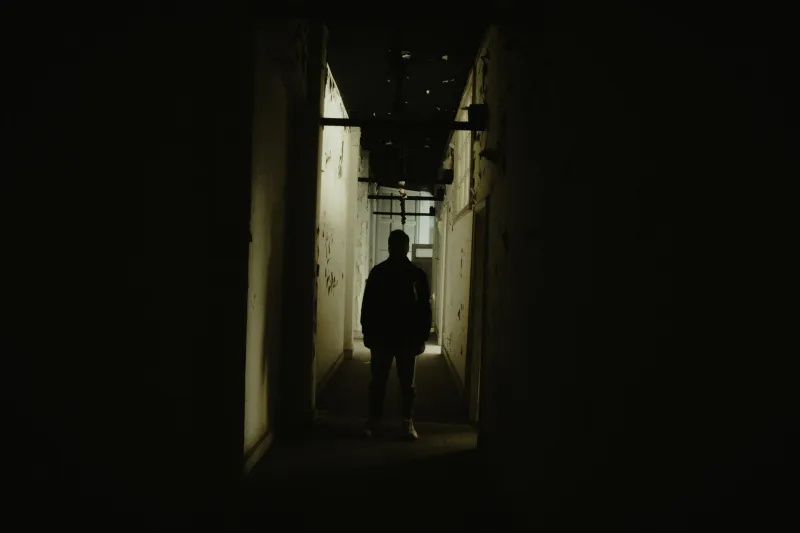
One of the earliest formally noted clusters emerged in the late 1980s, when a sleep disorder clinic in the Midwest began receiving an unusual surge of patient calls following a single Tuesday night in October. The callers had not spoken to one another. They were separated by hundreds of miles. Yet their dream reports shared a remarkably consistent architecture: a long corridor, a figure standing at its far end that refused to come closer yet somehow grew larger, and the sensation of a sound just below the threshold of hearing.
The clinic's director at the time noted the overlap in internal memos that were later obtained by independent researchers. She attributed the phenomenon to a shared cultural moment — a widely broadcast news event that had aired the previous evening. The explanation was tidy. It was also, as subsequent clusters would demonstrate, insufficient.
Because the news event explanation requires a shared media trigger. And in documented cases from the 1990s, 2000s, and as recently as the early 2020s, clusters have emerged among populations with no traceable common media exposure. Rural communities without reliable television access. Elderly residents in care facilities with no internet connectivity. Children too young to have processed the cultural content researchers pointed to as the catalyst.
The Psychological Architecture of Shared Fear
Clinical psychologists who study collective trauma and shared emotional states offer a more grounded, if still deeply strange, framework for understanding these events. The human nervous system, they argue, is exquisitely sensitive to environmental stressors that operate beneath conscious awareness — barometric pressure shifts, geomagnetic fluctuations, low-frequency sound waves generated by industrial activity or seismic micro-events.
Dr. Michael Persinger's controversial but widely cited research at Laurentian University in Ontario proposed that fluctuations in the Earth's geomagnetic field could influence temporal lobe activity during sleep, potentially shaping dream content in ways that feel externally imposed. While Persinger's broader claims about paranormal experience remain contested, the underlying neurological sensitivity he documented has found quiet acceptance in sleep science circles.
The implication is unsettling in its own clinical way: on certain nights, the planet itself may be whispering something into the dreaming mind. And across an entire nation of sleepers, the message arrives in the same dark envelope.
There is also the matter of collective psychological priming. When a society is under sustained, ambient stress — economic instability, political fracture, public health crisis — the emotional substrate of its population shifts in measurable ways. Cortisol levels rise collectively. Anxiety indexes climb. And the dreaming brain, which processes unresolved emotional material with ruthless efficiency, may draw from the same contaminated well.
In this reading, mass nightmare synchronicity is less a paranormal event than a psychological symptom — a fever dream shared by an entire culture that has absorbed the same unspoken fear.
The Cases That Resist Explanation
And yet. There are cases that resist even the most generous application of environmental and psychological frameworks.
In 2003, a paranormal research group operating out of the Pacific Northwest began soliciting dream reports through an early online forum dedicated to anomalous experience. Over a four-month period, they received 847 detailed submissions. When the researchers coded the submissions for recurring imagery, they identified a cluster of 112 reports — submitted by individuals across 34 states — that described a nearly identical sequence: standing in a field of dry grass at night, hearing a child's voice counting down from an unspecified number, and then the sky inverting, dark becoming light and light becoming an absolute, suffocating black.
The submissions arrived in a concentrated burst over three consecutive nights in November. The researchers found no common media event, no significant geomagnetic anomaly, and no traceable social connection among the submitters.
More recently, in the months following a series of unexplained atmospheric events over the American Southwest in 2021, online sleep communities documented a surge of nearly identical reports involving the sensation of being watched by something standing just outside a window — not seen, but known with absolute certainty to be present. The reports came from Nevada, Arizona, New Mexico, and as far east as Texas. They were submitted independently, often within hours of one another, by individuals who expressed bewilderment at their own certainty about what they had experienced.
What the Darkness Knows That We Do Not
The most unsettling theory circulating among researchers who take this phenomenon seriously is also the simplest: that human consciousness, during sleep, becomes briefly permeable in ways that waking life does not allow. That the barriers separating individual minds — barriers we treat as absolute, as foundational to the very concept of selfhood — are, in the darkest hours, somewhat less than solid.
This is not a comfortable idea. It does not fit neatly into the materialist framework that governs most of modern science. But it is the framework that certain researchers, working carefully and without fanfare, have found themselves reluctantly considering after years of documentation that points toward something they cannot otherwise name.
If the self is, in some small way, porous after midnight — if the dreaming mind reaches outward or receives inward — then the synchronized nightmare is not merely a curiosity. It is evidence of a connection that daylight refuses to acknowledge.
And somewhere in America tonight, thousands of people will close their eyes and enter the same corridor, face the same distant figure, and hear the same sound that has no name.
They will wake believing they dreamed alone.
They did not.