The Subjects Nobody Remembered: Declassified Files and the Forgotten Victims of America's Hidden Medical Experiments
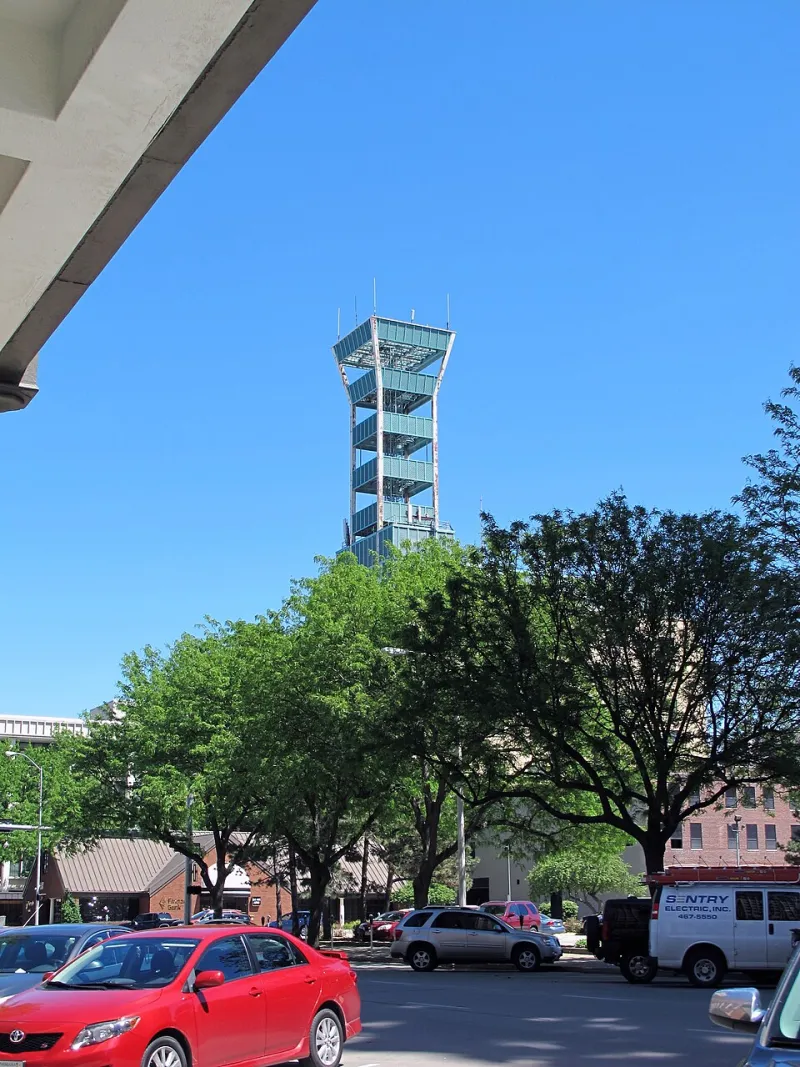
Photo: Evelyn Simak , CC BY-SA 2.0, via Wikimedia Commons
History tends to remember its most visible atrocities. The Tuskegee Syphilis Study. Operation Paperclip. The CIA's Project MKUltra. These names have entered the public consciousness — taught in classrooms, cited in congressional hearings, acknowledged, however reluctantly, by the institutions that perpetuated them. They have become, in a sense, the acceptable face of American institutional wrongdoing: disturbing enough to satisfy demands for accountability, familiar enough to feel contained.
What lies beneath them is less comfortable.
Beyond the recognized cases, in the declassified margins of government archives and the fragmented testimonies of communities that were never asked to speak, there exists a second tier of experimentation — less publicized, more deliberately concealed, and in many respects more revealing of the structural conditions that made such violations not merely possible but routine.
The Architecture of Concealment
To understand how unethical medical experiments were hidden from public record throughout the twentieth century, one must first understand the institutional infrastructure that made concealment not just feasible but bureaucratically elegant. Classification systems developed during and after World War II created legitimate mechanisms for sealing records that had nothing to do with national security and everything to do with liability.
The Atomic Energy Commission, the Department of Defense, the Public Health Service, and various branches of the intelligence community all operated research programs under layers of classification that effectively removed them from civilian oversight for decades. When those files were eventually declassified — often piecemeal, often incomplete — the researchers and administrators responsible were, in many cases, deceased. The institutions had reorganized. The paper trail had been thinned.
What remained was fragments.
Radiation and the Forgotten Wards
Among the lesser-discussed chapters of this history is the systematic exposure of hospital patients to radioactive materials during the 1940s and 1950s — experiments conducted not only at major research universities but at municipal hospitals serving low-income and minority populations who were rarely, if ever, informed of what was being administered to them.
The Advisory Committee on Human Radiation Experiments, convened by the Clinton administration in 1994, documented numerous such cases that had not previously received significant public attention. Patients in Cincinnati, Nashville, and Chicago — among other cities — received total body irradiation under protocols that prioritized military data collection over therapeutic outcome. Some subjects were terminally ill. Others were not. Consent documentation, where it existed at all, was cursory to the point of meaninglessness.
The Cincinnati experiments in particular, conducted at the General Hospital between 1960 and 1971 and funded in part by the Department of Defense, exposed predominantly Black patients to doses of radiation far exceeding therapeutic levels. The stated purpose was to study the effects of radiation on combat performance — a military question being answered at the expense of civilian patients who believed they were receiving cancer treatment.
Families who attempted to access records in subsequent decades encountered bureaucratic resistance that took years, in some cases, to overcome.
The Prison Pipeline
Incarcerated individuals represented another population systematically exploited by mid-century medical researchers operating with minimal oversight. The pharmaceutical industry's relationship with American prisons during the 1950s, 1960s, and into the 1970s produced a body of experimental data that underpins a significant portion of the modern pharmacological record — data obtained under conditions that would be categorically prohibited today.
Holmesburg Prison in Philadelphia became, under the direction of dermatologist Albert Kligman, perhaps the most extensively documented site of such experimentation. Between 1951 and 1974, Kligman and his collaborators subjected inmates to trials involving experimental pharmaceuticals, dioxin compounds, radioactive isotopes, and psychoactive substances — some under contract with the Army Chemical Corps. Kligman's own description of his first visit to Holmesburg — in which he reportedly compared the prison population to a field of ripe material awaiting harvest — has been cited repeatedly in bioethics literature as emblematic of the dehumanizing logic that enabled such programs.
What is less frequently discussed is the degree to which Holmesburg was representative rather than exceptional. Similar programs operated at state prisons in Iowa, Oregon, Maryland, and elsewhere. The regulatory vacuum that permitted them was not accidental — it reflected a deliberate policy environment in which the rights of incarcerated persons were treated as legally and morally negotiable.
Targeting the Margins
A pattern emerges across these hidden histories with a consistency that is difficult to attribute to coincidence. The subjects of unacknowledged experimentation were, with remarkable frequency, drawn from populations already marginalized by poverty, race, institutionalization, or legal status. Patients in state psychiatric facilities. Residents of federally administered Native American communities. Soldiers of color. Children in orphanages.
In the 1950s and 1960s, the Fernald State School in Massachusetts — an institution for children with developmental disabilities — became the site of experiments in which residents were fed radioactive calcium and iron in their breakfast cereal, with parental consent obtained through letters that described the study as a nutritional research program. The letters made no mention of radiation. The Quaker Oats Company and MIT were among the institutional participants.
The children who participated are now elderly. Some have died. The community around Fernald has spent decades processing what was done there, and the psychological weight of that processing — the grief, the anger, the particular horror of having been betrayed by institutions entrusted with the care of the most vulnerable — has not dissipated with time.
What the Files Cannot Say
Declassified documents provide facts. They provide dates, dosages, institutional affiliations, and the carefully neutral language of official correspondence. What they cannot provide is the texture of the experience — what it felt like to be a subject in an experiment you did not know you were part of, to suffer symptoms that were observed and recorded and never explained, to carry in your body the evidence of something that was officially denied.
Survivor testimony, where it has been gathered, fills some of that silence. But survivor testimony is finite. The communities most affected by these programs were often the least equipped — by poverty, by historical mistrust of institutions, by the absence of legal resources — to pursue accountability through formal channels.
The horror here is not merely historical. It is structural. The conditions that produced these experiments — the hierarchies of expendability, the insulation of institutional power from civilian accountability, the willingness to treat certain lives as instrumentally valuable rather than inherently so — did not disappear when the programs were discontinued. They adapted.
The Haunting That Remains
There is a reason these histories resist clean resolution. They are not the stories of individual villains whose removal restored order. They are the stories of systems — medical, governmental, corporate, military — operating precisely as they were designed to operate, producing outcomes that were predictable, documented, and chosen.
The communities that were experimented upon carry that knowledge in ways that shape how they interact with healthcare institutions to this day. Medical mistrust in Black communities, in Native American communities, in communities with histories of institutional exploitation, is not irrational. It is a rational response to a documented record.
The darkest chapters of American medical history are not confined to the past. They live in the hesitation before a clinic visit, in the question asked of a doctor that goes unanswered, in the silence of families who learned, too late, what had been done to the people they loved.
The files have been opened. But the full accounting has not yet been made.