Delivered From Beyond: The Haunting Reality of Messages Sent by the Dead
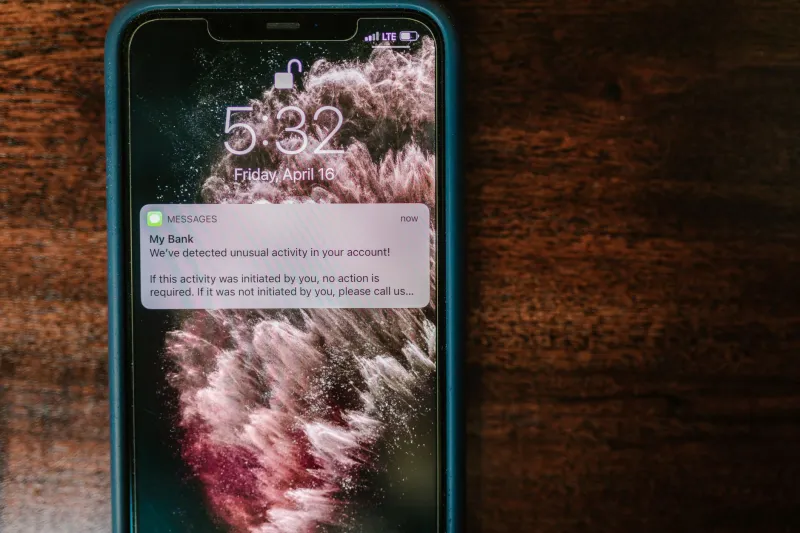
There is a particular cruelty in the way a phone screen lights up in the middle of the night. For most Americans, that soft glow signals something mundane — a late reply, a promotional notification, a friend in a distant time zone. But for a growing number of people across the country, that same light has carried something altogether different: a message from someone who should no longer be capable of sending one.
The dead, it seems, are finding ways to communicate.
A Pattern Too Consistent to Dismiss
The reports began appearing with enough regularity that grief counselors, digital forensics professionals, and paranormal investigators alike started taking notice. A widow in rural Ohio received a text from her late husband's number fourteen weeks after his burial — a single sentence that referenced a private conversation they had shared the morning before his fatal accident. A college student in Portland discovered an email from her deceased mother sitting quietly in her inbox, timestamped three months after the funeral, containing nothing but a photograph the family had never seen before.
In Nashville, a man reported receiving a Facebook message from his brother — dead of a sudden cardiac event — that used a nickname known only within the immediate family. The account had been memorialized by the platform within days of the death. The message, according to Facebook's own logs, originated from an IP address that could not be traced to any known device.
These are not isolated incidents. Online communities dedicated to grief and loss have become quiet repositories for such accounts, with new submissions arriving weekly. The consistency of certain details — the deeply personal content of the messages, the inexplicable technical origins, the timestamps that precede or follow any logical window of automated activity — has made it increasingly difficult for investigators to assign a single, comfortable explanation.
What the Experts Are Willing to Say
Digital forensics professionals approached on the subject tend to begin with the rational. Scheduled messages, they explain, are a legitimate feature embedded in many email platforms and certain third-party texting applications. It is entirely possible for an individual to compose and queue a message for future delivery, a practice sometimes employed by people who know their time is limited. Memorial services and estate attorneys have noted a modest uptick in clients requesting guidance on how to leave digital correspondence for loved ones after death.
Yet this explanation accounts for only a fraction of the documented cases. Scheduled messages do not explain notifications that reference events occurring after the sender's death. They do not account for messages sent from platforms that lack scheduling functionality, nor do they address the accounts that had been formally locked or memorialized before the transmission was recorded.
One forensic analyst, speaking on background, described examining server logs from two separate incidents and finding what she called "origin voids" — transmission records that indicated a message had been sent and received, but contained no traceable point of origin. "It is the digital equivalent of a footprint with no foot," she said. "The infrastructure recorded the event. It simply cannot tell you what caused it."
Hacked accounts and sophisticated spoofing technology offer another avenue of inquiry. Bad actors have long exploited the grief of the bereaved, assuming the digital identities of the deceased to extract money or personal information. Cybersecurity researchers have documented cases in which criminal networks scraped personal data from a deceased individual's social media history to craft convincing, personalized messages. The intent, in those cases, was financial.
But many of the accounts collected by researchers contain details that no external actor could reasonably possess. Private nicknames. References to unshared memories. Photographs stored on devices that had been physically destroyed or surrendered to law enforcement as part of estate proceedings.
The Weight of What Is Received
Perhaps more revealing than the technical mystery is the human dimension of these encounters. Those who receive such messages describe a response that moves through several distinct phases. The initial shock is followed almost immediately by a desperate need to authenticate — to confirm, beyond any doubt, that the message is real and not a product of grief-induced misperception. Then comes something harder to name: a sustained, unresolved tension between comfort and dread.
"I wanted it to be him," one recipient, a woman from suburban Chicago whose son died by suicide, told an online grief forum. "And I was terrified that it was."
That ambivalence is itself significant. Grief counselors note that the bereaved are acutely sensitive to anything that appears to bridge the distance between the living and the dead. A message that arrives with inexplicable intimacy does not simply comfort — it destabilizes. It reopens questions that the mourning process had begun, however painfully, to close.
Several recipients reported that the messages contained information they subsequently verified as accurate — details about locations, objects, or conversations that the deceased could only have known during life. In at least two documented cases, the content of the posthumous message led family members to discover something the deceased had deliberately concealed: a hidden document, a safety deposit box, a final confession.
The Infrastructure of the Afterlife
America's relationship with death has always been complicated by its relationship with technology. The country that gave the world the telegraph, the telephone, and the internet has also produced, in each successive generation, a new class of people who believed that the latest communication technology might serve as a conduit between the living and the dead. Victorian-era spiritualists pressed their ears to early telephone receivers hoping to catch a voice from beyond. Radio operators in the 1920s reported phantom transmissions they could not explain. The pattern is old. Only the medium changes.
What distinguishes the current moment is the sheer volume and granularity of the digital record. The deceased leave behind vast archives — years of text messages, email threads, social media activity, cloud-stored photographs. The algorithms trained on this data are sophisticated enough to generate convincing simulacra of a person's voice and written style. Several technology companies have already moved toward offering "digital afterlife" services that promise to animate the data of the dead into interactive personas.
Whether any of those services are responsible for the messages currently unsettling American households is, as yet, unconfirmed. What is confirmed is that the boundary between a person's digital presence and their physical absence is growing thinner with each passing year.
What Remains When Nothing Should
The darkest interpretation of these events requires no supernatural framework whatsoever. It requires only the acknowledgment that modern digital infrastructure is vast, imperfectly understood, and capable of preserving echoes of the living long after they have gone. That somewhere in the architecture of servers, scheduled tasks, and automated processes, a fragment of a person can persist — can reach forward in time and make contact — without any conscious intent behind it.
That possibility may, in the end, be more disturbing than the alternative. A ghost, at least, implies intention. A glitch implies only that the systems we built to connect us are now so complex, so layered with accumulated data and automated behavior, that they have developed their own relationship with death.
And they have not yet learned to let go.