What the Cameras Recorded When No One Was There: The Unsettling Mystery of Surveillance Footage That Defies Reality
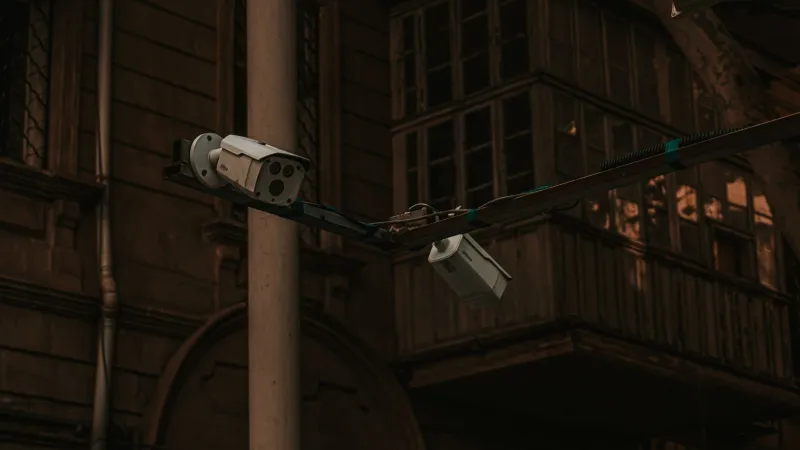
There is a particular kind of dread reserved for the moment a security professional rewinds a recording and sees something that should not be there. Not a burglar. Not a trespasser. Something far more disquieting — an event that, by every account from every witness present that night, never actually happened.
Across the United States, a quiet and largely unreported phenomenon has been accumulating in the logs of casino surveillance rooms, hospital monitoring stations, warehouse security booths, and late-night retail operations. The recordings exist. The timestamps appear legitimate. And yet the people who were present — trained, sober, credible professionals — insist with absolute certainty that what the footage shows is impossible.
The Witness and the Recording Cannot Both Be Right
Consider the nature of the problem before entertaining its more unsettling implications. A security operator at a mid-sized casino in the American Southwest reviewed footage from a slow Tuesday evening and observed a patron standing at a slot machine on the main floor at 2:14 a.m. Routine enough. Except that same patron had been escorted to a back office by two floor managers at 2:09 a.m. and remained there, under direct supervision, until 2:31 a.m. Three human witnesses. One contradicting camera.
The incident was logged internally, attributed to a "timestamp synchronization error," and buried in paperwork. The security operator, who requested anonymity when speaking to independent researchers, described the experience not as confusing but as deeply wrong. "It wasn't that the footage was unclear," she said. "It was clear. Crystal clear. That's what made it so hard to let go of."
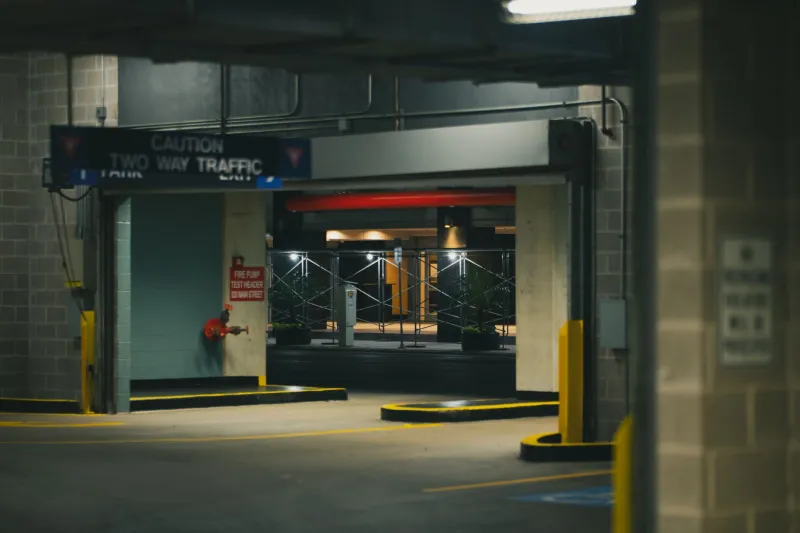
This kind of account is not isolated. Researchers studying anomalous surveillance data have catalogued dozens of comparable reports from facilities across the country — hospitals in the Midwest where patients appear in corridors they could not physically reach, retail stockrooms in the Southeast where inventory moves between camera cuts without any person visibly touching it, and parking structures in major metropolitan areas where a single vehicle appears simultaneously in two separate camera feeds covering non-overlapping zones.
The Technical Explanations and Their Limits
The surveillance industry has a standard vocabulary for these moments. Frame drops. Buffer corruption. Encoding artifacts. Clock desynchronization between networked cameras. These are real phenomena, and they account for a substantial portion of the anomalies that operators encounter in the course of routine work.
But forensic video analysts — professionals who testify in courtrooms and reconstruct crime scenes from digital recordings — have begun to note that some of the reported anomalies do not conform to any known technical failure mode. Encoding artifacts produce visual distortions: pixelation, ghosting, color banding. They do not, as a rule, produce coherent, high-resolution footage of a person performing a specific action in a location where that person demonstrably was not.
"There is a category of footage that I cannot explain with the tools I have," one analyst, who has worked extensively with law enforcement agencies in the Pacific Northwest, told an independent documentary researcher. "And I have been doing this for nineteen years."
The analyst declined to speculate on what might account for the unexplainable recordings. Others have been less restrained.
Hours That Belong to No One
Perhaps the most disturbing category of anomaly involves not what appears in the footage, but what disappears from it. Security operators at several facilities — including a long-term care hospital in the mid-Atlantic region and a distribution center in the Ohio River Valley — have reported discovering gaps in their recordings that correspond to no system event, no power interruption, and no scheduled maintenance window.
The gaps are not random. In multiple reported cases, the missing footage spans precisely the same duration: intervals that witnesses describe as feeling subjectively extended, as though a shift that should have lasted six hours somehow consumed eight. When operators review the logs, the missing time is simply absent — not corrupted, not overwritten, not flagged. Gone, as cleanly as if it had been excised by someone who understood exactly what they were removing.
One overnight security supervisor at a large Southeastern distribution center described arriving at the end of his shift to find that four hours of footage from a specific camera cluster had vanished. No alarm had triggered. No breach had been recorded. His own time card confirmed he had been present throughout. "I was there for every minute of it," he said. "The camera wasn't."
What the Cameras May Actually Be Seeing
The more philosophically inclined researchers who have examined these reports raise a question that the technical community is understandably reluctant to entertain: what if the cameras are functioning correctly?
The premise of surveillance technology rests on a foundational assumption — that the camera captures objective reality, that what it records corresponds precisely to what occurred in front of its lens. This assumption is so deeply embedded in legal, institutional, and cultural practice that challenging it feels almost absurd. And yet the assumption itself has never been rigorously tested against the possibility that objective reality, under certain conditions, may not be entirely stable.
Fringe researchers and a small number of theoretical physicists working at the edges of quantum mechanics have proposed, carefully and with considerable hedging, that certain environmental or electromagnetic conditions might produce localized distortions in the way events unfold — distortions imperceptible to human consciousness but potentially detectable by the cold, indifferent eye of a digital sensor. If such distortions exist, a surveillance camera would not know to disbelieve what it recorded. It would simply record.
This is speculation. It is worth naming it as such. But it is the kind of speculation that becomes harder to dismiss when a forensic analyst with nineteen years of experience says he cannot explain what he is looking at.
The Silence Around the Footage
What may be most telling about this phenomenon is not the footage itself but the institutional response to it. In nearly every documented case, the anomalous recordings are quietly reclassified, attributed to equipment error, and removed from active files. The operators who report them are counseled, reassigned, or simply never heard from again in any professional capacity connected to the incident.
The surveillance industry, like most industries, has a powerful incentive to maintain confidence in its product. Acknowledging that cameras sometimes record things that did not happen — or fail to record things that did — is not a conversation that serves commercial interest. And so the conversation does not happen, at least not in any official register.
It happens instead in the margins: in anonymous online forums frequented by overnight security workers, in quiet conversations between analysts who trust each other, in the careful, measured language of people who know that what they witnessed sounds impossible and who have learned, through experience, that saying so publicly costs more than it is worth.
The cameras keep running. The footage keeps accumulating. And somewhere in the archive of what they have seen, in the gaps and the impossibilities and the hours that belong to no one, something continues to wait — patient, unblinking, and entirely unconcerned with whether anyone believes it is there.