The Uninvited: Mysterious Strangers Frozen in America's Family Photographs
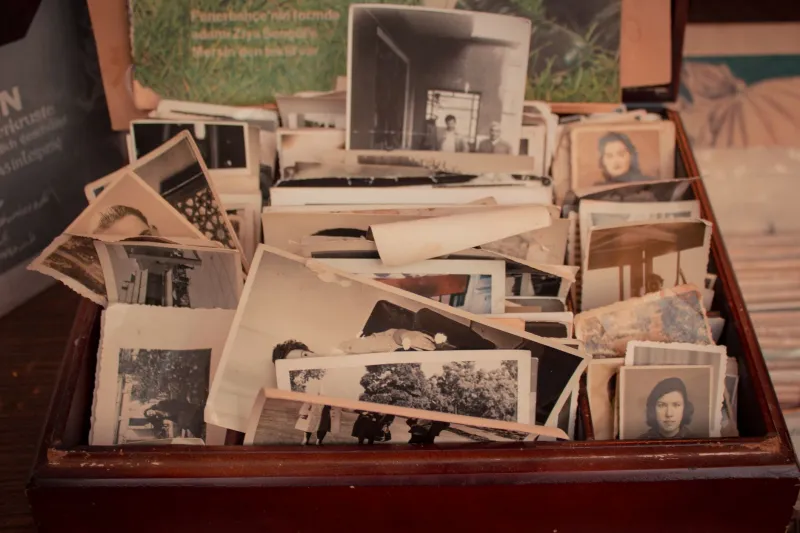
There is a particular kind of dread reserved for the familiar made strange. A shoebox of old photographs pulled from an attic shelf, the smell of aging paper, the faces of grandparents caught mid-laugh at a summer barbecue — and then, standing just behind the hydrangea bushes at the edge of the frame, someone no one in the family has ever seen before. Not a neighbor who wandered into the shot. Not a distant cousin whose name has simply been forgotten. Someone whose presence, the longer you study it, begins to feel deliberate.
Across the United States, this experience has quietly accumulated into something researchers, paranormal investigators, and amateur genealogists are no longer willing to dismiss. The uninvited stranger in the family photograph has become one of the most persistent and least explained phenomena in the intersection of memory, photography, and the unexplained.
When the Archive Reveals a Face That Doesn't Belong
Vintage photographs carry an implicit contract: what is captured was present. The camera does not invent. Yet for decades, families sorting through estate sales, digitizing old albums, and cataloguing inherited images have encountered figures who appear to violate that contract entirely.
One of the most documented cases emerged from a rural Ohio family in the early 2000s, when a woman digitizing her late grandmother's photograph collection discovered a figure standing at the far left of a 1947 Christmas gathering. The image showed eleven family members she could identify by name. The twelfth, a pale-faced woman in a dark dress, stood slightly apart from the group, her expression composed and her eyes directed not at the camera, but at the family's youngest child. No one in three surviving generations of the family could place her. No subsequent research — census records, church directories, neighborhood registries — produced a match.
This case, which circulated widely among paranormal research communities, is not singular. Similar reports have surfaced from California to the Carolinas, from New England farmhouses to Midwestern church picnics. The details shift, but the essential structure holds: a photograph taken at a private family event, a face no living member can identify, and an unsettling quality to the figure's positioning that suggests awareness rather than accidental inclusion.
The Psychology of the Unrecognized Face
Before reaching for supernatural explanations, it is worth understanding why certain unidentified faces lodge themselves so deeply in human consciousness. The human brain is wired, with remarkable precision, for facial recognition. Researchers at institutions including MIT and Carnegie Mellon have demonstrated that the fusiform face area — a region of the brain dedicated to processing faces — activates even in response to ambiguous or partial facial features. This is why we see faces in wood grain, in cloud formations, in the shadows of empty rooms.
But this same neurological sensitivity has an inverse effect. When a face appears in a context where it should be recognized and is not, the brain registers something close to alarm. Psychologists describe this as a violation of social schema — the mental map we carry of who belongs in a given environment. A stranger in a family photograph is not merely unknown. The brain processes that stranger as a category error, something present in a space where presence requires justification.
This may explain why unidentified figures in vintage photographs are so difficult to simply set aside. The mind keeps returning to them, searching for resolution that the image itself refuses to provide.
Estate Sales and the Photographs Nobody Claimed
The American estate sale has become an unlikely frontier for this kind of discovery. As families disperse and properties are liquidated, photograph collections pass into the hands of strangers — antique dealers, collectors, curious buyers who purchase old albums for the aesthetic of the images rather than any personal connection to the subjects.
Within these collections, researchers have begun cataloguing recurring anomalies. Certain figures appear in photographs from entirely unrelated families, separated by decades and geography, yet bearing an uncanny resemblance to one another. A woman with an identical posture and a similar dark dress photographed at a wedding in Vermont in 1932 and at a family reunion in Tennessee in 1958. A man standing at the edge of a group portrait taken in Chicago in 1941 whose face, when compared to an image found in a San Francisco estate sale, appears strikingly — some would say impossibly — alike.
Skeptics attribute these parallels to confirmation bias: the human tendency to find patterns where randomness exists. Paranormal investigators argue that the repetition is too structured to be coincidental. Neither explanation has achieved consensus, which may be precisely why the photographs continue to disturb.
The Smiling Problem
Of all the details reported in these accounts, one recurs with particular frequency and particular unease: the smile. The unidentified figures in these photographs are rarely neutral in expression. They smile — not the broad, performative smile of someone aware of the camera, but something quieter, more contained. A smile that appears directed inward, or directed at someone specific within the frame, rather than outward toward the viewer.
This detail matters because it complicates the most straightforward explanations. A photographic artifact, a double exposure, a processing anomaly — none of these produce directed expression. The smile implies subjectivity. It implies that whoever or whatever appears in these images was, at the moment of exposure, experiencing something. Reacting to something. Aware.
For families who have encountered these images, the smile is often the detail they find most difficult to discuss. It transforms the mystery from an intellectual puzzle into something more personal, more threatening. The stranger is not merely present. The stranger is pleased to be there.
What Investigators Have Found — and What They Haven't
Serious paranormal investigators who have examined these cases operate with methodological care that popular media rarely credits them with. Photographs are analyzed for signs of tampering, darkroom manipulation, or digital alteration. Genealogical researchers cross-reference family records against regional archives. In a number of cases, these efforts have produced mundane explanations: a neighbor who attended a party and was simply never formally introduced to the family's descendants, a hired photographer's assistant who stepped into frame, a distant relative whose branch of the family tree had been quietly severed.
But in a significant number of cases, no explanation has emerged. The figure remains unidentified. The photograph remains unexplained. And the family, if one still exists to ask, remains unsettled.
What these investigations consistently fail to produce is the thing that would resolve the matter entirely: a definitive answer in either direction. No case has been proven to involve a genuinely anomalous presence. But no case — not the Ohio Christmas photograph, not the estate sale collections, not the recurring figures that appear across unrelated archives — has been fully explained away either.
The Photograph as Threshold
There is an older understanding of photography, one that predates the digital age and even the widespread democratization of the camera, that treated the photographic image with a degree of reverence bordering on the sacred. Early American portrait subjects sometimes refused to be photographed, believing the camera capable of capturing something beyond light and shadow. Indigenous communities across North America held complex beliefs about the relationship between image and spirit. Victorian mourning photography, in which the recently deceased were posed alongside the living, reflected a cultural comfort with the presence of death within the domestic frame.
We have largely abandoned these frameworks. We treat the photograph as pure documentation, incapable of meaning more than what we brought to it.
The uninvited strangers in our family albums suggest that this confidence may be premature. Whatever they are — forgotten neighbors, processing errors, or something the rational mind has no category for — they persist. They smile. They watch.
And in the darkest hours, when the shoebox comes down from the shelf and the old photographs spread across the kitchen table, they wait to be noticed again.