Voices From the Void: The Phantom Broadcasts Haunting America's Dead Airwaves
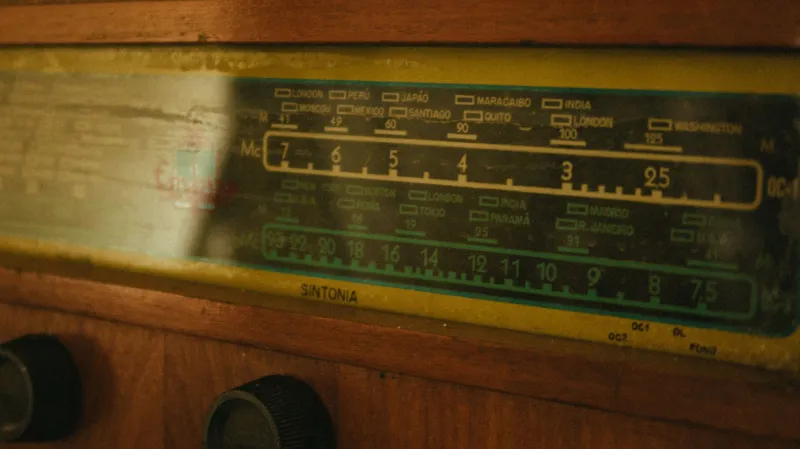
There is a particular kind of silence that exists between licensed radio frequencies — a dead space that, by every regulatory measure, should remain empty. The Federal Communications Commission allocates the spectrum with surgical precision, assigning bands to broadcasters, emergency services, military channels, and commercial operators. What falls between those allocations is, in theory, nothing. Static. White noise. The electronic equivalent of a sealed, empty room.
Except, in documented cases spanning decades and stretching across nearly every region of the country, that room is not empty at all.
The Operators Who Heard What Shouldn't Be There
Amateur radio — commonly known as ham radio — maintains a devoted community in the United States, with over 750,000 licensed operators actively scanning, transmitting, and cataloguing the electromagnetic spectrum. These are not casual hobbyists. Many hold advanced licenses, possess sophisticated equipment, and understand signal behavior at a technical level that rivals professional analysts. When they report anomalies, those reports carry weight.
A retired electrical engineer from rural Ohio, who has operated under his ham license for over thirty years, describes an encounter in the winter of 2019 that he has never been able to reconcile. While scanning through the 40-meter band late on a Tuesday evening, he encountered a transmission on a frequency he had verified, through multiple databases, as unassigned. The broadcast consisted of a female voice reading sequences of numbers in a measured, affectless tone — not unlike the infamous numbers stations that gained public notoriety during the Cold War. But this was different. Between each sequence, there was a sound he describes as "breathing, or something close to it. Rhythmic. Patient. Like whatever was transmitting knew I was there."
He recorded seventeen minutes before the signal vanished without degradation — no fade, no interference pattern, simply gone, as though a switch had been thrown.
Numbers Stations and Their Unsettling Descendants
To understand why these phantom transmissions unsettle even the most analytically minded investigators, it helps to understand the legacy they appear to inherit. Numbers stations — shortwave broadcasts transmitting coded numerical sequences — have been documented since World War I. Intelligence agencies worldwide are widely believed to have used them to communicate with field operatives. The Conet Project, a landmark 1997 archival recording effort, preserved hundreds of hours of such broadcasts, many of which have never been officially attributed to any government or organization.
The critical distinction, however, is that most documented numbers stations operated on assigned or at minimum traceable frequencies. What contemporary investigators are encountering exists in the unassigned margins — spectral territory that, in regulatory terms, is supposed to be acoustically barren.
Signal analyst and independent researcher Dana Mercer, who operates out of the Pacific Northwest and has spent eight years cataloguing anomalous transmissions, has logged over forty incidents across fourteen states. Her methodology is rigorous: every claimed anomaly is cross-referenced against FCC allocation records, checked for possible intermodulation interference from nearby licensed sources, and subjected to digital signal processing analysis to identify encoding patterns.
"Several of these transmissions show characteristics that don't match any known broadcasting technology," she states in her published field notes. "The carrier wave behavior in particular — the way the signal sustains without the drift you'd expect from conventional oscillators — is something I have not been able to explain through standard models."
The Government Theory and Its Limits
The most immediately satisfying explanation for phantom transmissions is classified government activity. The United States military and intelligence apparatus maintains communication infrastructure of extraordinary complexity, and not all of it is publicly documented. It is entirely plausible — and many researchers argue probable — that certain transmissions attributed to the unexplained are, in fact, deeply classified programs broadcasting on frequencies informally commandeered from the unassigned spectrum.
This theory, however, has limits that serious investigators are reluctant to ignore. Several of the transmissions on record carry content that strains the classified-communications framework. One incident documented in 2021 by a licensed operator in rural Tennessee involved a broadcast that appeared to contain audio — not coded sequences, but what the operator describes as "a conversation, in English, between people who didn't seem aware they were transmitting." The voices discussed locations, times, and events in a manner that was mundane in tone but contextually incoherent. Cross-referencing the dates and locations mentioned against public records yielded nothing.
If these were classified military communications, the operational security failures implied by such a broadcast would represent a catastrophic lapse. Intelligence professionals consulted informally by several researchers found the classified-origin theory increasingly difficult to sustain against the full body of documented evidence.
When the Signal Becomes Personal
Perhaps the most disturbing subset of these accounts involves transmissions that appear, in some manner, responsive. The Ohio engineer's account of rhythmic breathing between sequences is one such case. There are others.
A licensed operator in coastal Maine reported a 2020 incident in which a transmission on an unassigned shortwave frequency seemed to pause when she keyed her microphone. Not fade — pause. Then resume, at a slightly altered cadence. She keyed her microphone three more times over the course of twenty minutes. Each time, the transmission paused for precisely the duration of her transmission, then continued. She has not been able to determine whether this represented an automated response to her signal, a coincidence of timing, or something she declines to name directly in her written account.
"I stopped keying after the fourth time," she writes. "I'm not sure I wanted to know if it would happen again."
Mercer, in her analysis of similar responsiveness reports, is cautious but not dismissive. "Automated systems can be designed to pause on detected carrier signals — this is a known function in certain relay systems. But for that to explain these cases, you'd need an automated system broadcasting on unassigned frequencies, sophisticated enough to detect a low-power ham transmission, and motivated by some purpose no one has identified. That explanation solves one mystery by creating three more."
What Listens Back
The electromagnetic spectrum is not a passive medium. It is a shared environment, and like any shared environment, its boundaries are imperfect. Military researchers, fringe physicists, and a small but persistent community of investigators have long speculated about whether the spectrum might, under certain conditions, carry transmissions from sources that exist outside conventional geography — whether that means classified underground facilities, experimental broadcasting platforms, or something that resists more comfortable categorization.
The darkest hour, in radio terms, is not midnight. It is the moment just before dawn, when atmospheric conditions allow shortwave signals to travel extraordinary distances, bending around the curvature of the earth and arriving from places that, in daylight, would be beyond reach. Amateur operators call this the "gray line" — the terminator between night and day, where propagation becomes strange and signals appear from unexpected directions.
Many of the most disturbing documented phantom transmissions have occurred in precisely this window.
Whether that is coincidence, atmospheric physics, or something that understands when the conditions are right to be heard remains, for now, unanswered. The frequencies sit silent in the official record, allocated to no one, monitored by no regulatory body.
But somewhere between the stations, in the dead space that is supposed to hold nothing, something has been transmitting for a very long time.
And it does not appear to be finished.