The Passenger Who Was Never There: America's Night Drivers and the Figure That Keeps Coming Back
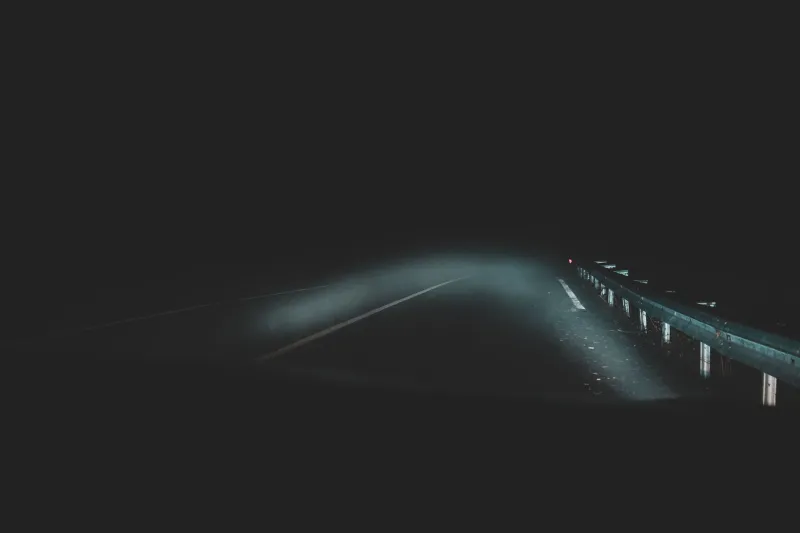
Somewhere between 2:00 and 4:00 in the morning, on a stretch of American highway that looks identical to a thousand others, a driver glances into their rearview mirror and sees someone sitting in the back seat. The figure is unremarkable at first — a person who appears tired, perhaps a little pale, dressed in clothing that is slightly wrong for the season. The driver, already deep into the particular dissociation that long night shifts produce, does not immediately register the impossibility of what they are seeing. Then the figure speaks. And then it is gone.
This is not a single story. It is, by any honest accounting, dozens of them — possibly hundreds — filed across rideshare platform forums, long-haul trucking communities, delivery driver subreddits, and local police non-emergency lines in at least fourteen states over the past several years. What makes these accounts remarkable is not their volume alone, but their consistency. The details converge in ways that are difficult to attribute to coincidence, cultural cross-contamination, or the ordinary hallucinations of sleep deprivation.
A Pattern Emerges from the Dark
The earliest documented wave of these reports appears to cluster around 2019, though isolated accounts predate this period by years. Drivers in Georgia, Ohio, Nevada, and Washington State independently described encounters with a figure — almost always described as a young adult, gender ambiguous, with an expression of calm that felt profoundly misplaced — who appeared either in their vehicle without explanation or materialized on the roadside in a location where no pedestrian could reasonably have been standing.
What distinguishes these accounts from ordinary ghost stories is the interaction. In a significant number of cases, the figure speaks. The content of these conversations is mundane to the point of being unsettling. Drivers report being asked about the time, about their destination, about whether a particular exit is coming up. One account, posted to a private Facebook group for Uber drivers in the Midwest, described a figure who asked the driver if they had ever wondered what it felt like to drive the same road forever. The driver turned to respond. The back seat was empty. The door, the driver confirmed, had not opened.
The Geography of Disappearance
Independent researchers attempting to map these sightings have noted a loose but suggestive geographic pattern. The reports concentrate not in urban centers but along what might be called transitional corridors — stretches of interstate or state highway that connect population centers but pass through long, uninhabited stretches. Interstate 40 through New Mexico and Arizona. Highway 50 in Nevada, long nicknamed the Loneliest Road in America. Rural sections of I-75 through Kentucky and Tennessee. These are places where, as one researcher noted, the distance between one human being and the next is measured in miles rather than feet.
There is a psychological logic to this distribution. Researchers studying the cognitive effects of prolonged highway driving have documented a phenomenon sometimes called highway hypnosis, in which the brain enters a semi-automated state, processing the mechanics of driving while conscious attention narrows dramatically. In this state, the mind becomes susceptible to what psychologists describe as intrusive ideation — unbidden thoughts and perceptions that feel externally imposed rather than internally generated. Critics of the supernatural interpretation argue that the phantom passenger reports are a predictable byproduct of this neurological condition, amplified by isolation, caffeine dependency, and irregular sleep cycles.
This explanation is plausible. It is also, upon closer examination, incomplete.
What the Drivers Say That Science Struggles to Explain
The highway hypnosis hypothesis accounts for individual hallucinations. It does not account for the specificity of shared detail across drivers who have never communicated with one another. It does not account for the cases — and there are several — in which a second occupant in the vehicle corroborated the sighting. It does not account for the driver in rural Oregon who, after reporting a figure standing in the road that caused her to brake suddenly, found a handprint on the outside of her passenger-side window. Cold, she said. The glass was cold where the print was, even though the night was warm.
Nor does it account for the accounts in which the figure's appearance preceded, by hours or days, some other significant event in the driver's life. Several drivers, speaking in online communities with the particular candor that anonymity permits, described the encounter not as frightening in the moment, but as ominous in retrospect — a visitation that felt, in hindsight, like a warning they had not known how to read.
The Hoax Hypothesis and Its Limitations
A coordinated hoax is perhaps the most comforting explanation available, and it has been proposed with some frequency by skeptics. The theory holds that a network of individuals — perhaps drawn together by a shared interest in paranormal performance art, perhaps motivated by something more calculated — is staging these encounters, exploiting the vulnerability of isolated night drivers for reasons that range from social media content to something more deliberately cruel.
This explanation has surface appeal. It falters on the question of logistics. The geographic spread of the reports, their distribution across years, and the absence of any identified organizing network make a sustained, coordinated campaign difficult to sustain as a theory. Hoaxes of this scale leave evidence. They attract participants who eventually speak. So far, no such participant has come forward.
The Road as Threshold
There exists, in American folklore, a long tradition of the road as a liminal space — a place that belongs neither to the origin nor the destination, where the ordinary rules of the world are suspended and something older and less governed takes their place. The hitchhiker ghost is among the most enduring figures in this tradition, appearing in documented form as early as the 1930s and persisting through every subsequent decade with remarkable structural consistency.
What is new is not the story. What is new is the medium through which it is being told. The rideshare economy has created an unprecedented class of nocturnal travelers — people who spend their darkest hours alone in metal boxes, moving through the country's empty arteries, available to whatever the night chooses to place in their path. They carry GPS trackers and dash cameras and the ability to share their experiences with thousands of strangers in real time. And still, the figure returns. Still, the back seat is empty when they look.
The Hour When the Road Belongs to Someone Else
No one has identified the passenger. No one has captured a clear image, despite the proliferation of recording devices now standard in commercial vehicles. The figure does not age, does not vary significantly across thousands of miles of American highway, and does not, by any account, appear to mean well or mean harm. It appears, it speaks in the language of ordinary human transaction, and it leaves.
What it leaves behind is harder to quantify. Drivers who have reported these encounters describe a persistent unease that attaches itself not to the dark in general, but to the specific quality of darkness found between 2:00 and 4:00 in the morning on a road that stretches in both directions without end. They describe checking mirrors differently. They describe a reluctance to accept the silence that follows.
The darkest hour is not a metaphor for these drivers. It is a scheduled shift. And something, it seems, has learned their hours.