Photographs From Nowhere: The Growing American Mystery of Images No One Remembers Capturing
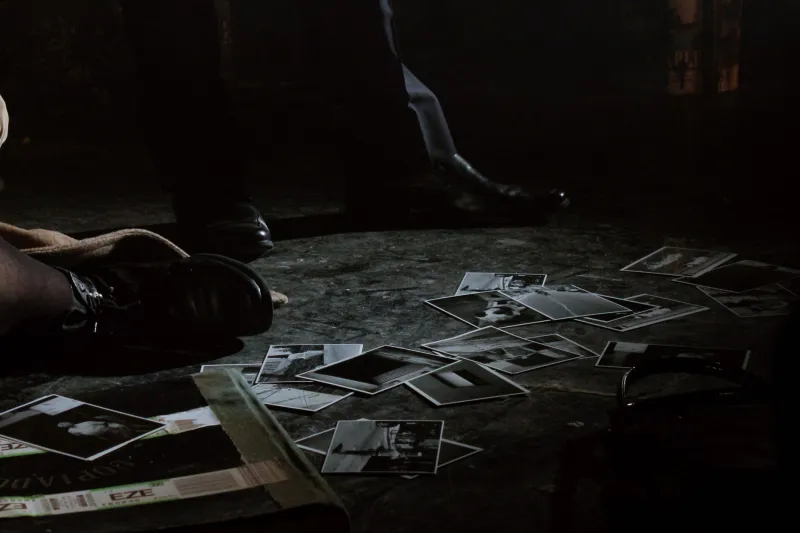
There is something uniquely disturbing about photographic evidence. Unlike a half-remembered dream or a fleeting sensation of unease, a photograph carries the implicit weight of reality. It insists upon itself. It says: this happened. Which is precisely what makes the following phenomenon so deeply unnerving — because across the United States, a growing number of people are encountering photographs that claim to be real, yet correspond to no memory they can locate.
They open their phones. They scroll through cloud-synced libraries. They dig through old hard drives or dusty shoeboxes. And there, nestled between the mundane and the familiar, they find images that should not exist: pictures of themselves standing in places they've never visited, sitting beside people whose names they cannot recall, or staring into a camera in the middle of the night with expressions that feel foreign to their own faces.
The question these images raise is not merely psychological. It is existential. Who was holding the camera?
A Pattern Emerging in the Digital Age
The sheer volume of personal photography in modern American life has created conditions in which this phenomenon can surface and be documented at scale. The average American takes hundreds, sometimes thousands, of photographs per year. Cloud storage platforms automatically back up images across devices, often without the user's full awareness of what is being saved or from where it originates.
This digital saturation creates an obvious opening for practical explanations. Shared family accounts, synced devices, misfiled images from group chats — these are the first defenses that skeptics deploy. And in many cases, they are sufficient. But researchers and mental health professionals who have begun paying closer attention to this pattern note that a significant subset of reported cases resists such tidy resolution.
Dr. Miriam Calloway, a cognitive psychologist based in Chicago who has informally surveyed participants in online communities devoted to the phenomenon, describes a recurring profile among those who come forward. "These are not people who are confused about their phone settings," she noted in a 2023 interview. "Many of them are technically literate, detail-oriented individuals who have already exhausted every rational explanation before they start talking about it publicly. What they are left with is a photograph and a blank where the memory should be."
The Testimonies
The accounts themselves carry a consistency that is difficult to dismiss. A woman in rural Ohio describes finding a photograph on her phone — time-stamped at 2:47 a.m. — of herself standing in her own kitchen, facing the corner, with every light in the house turned off. She lives alone. She does not sleepwalk, or had no prior reason to believe she did.
A retired schoolteacher from Savannah, Georgia, discovered a photograph tucked inside a printed album she assembled herself more than a decade ago. The image shows her seated at a restaurant table she does not recognize, across from a man whose face is partially obscured by shadow. The clothing she wears in the photograph matches an outfit she owned during that period. The man has never been identified.
In Portland, Oregon, a graphic designer found a folder on his external hard drive containing forty-three photographs taken across what appeared to be a single evening — images of streets, storefronts, and interiors of buildings in a neighborhood he could not immediately identify. He appeared in seven of them. The metadata listed the capture device as his own camera. He had no memory of that evening whatsoever.
These are not isolated reports. Online communities dedicated to the phenomenon have accumulated thousands of similar testimonies, with new ones arriving regularly.
What Psychology Offers — and Where It Falls Short
The psychological framework most frequently applied to these accounts is dissociative amnesia — a condition in which the mind severs access to specific memories, often in response to stress or trauma. Dissociative episodes can, in documented cases, involve complex behaviors carried out without conscious awareness, including travel, social interaction, and yes, photography.
This explanation accounts for a meaningful portion of the reported cases. Dissociative disorders are underdiagnosed in the United States, and the stigma surrounding them means that many people reach adulthood without ever receiving an accurate assessment of their own cognitive experiences.
However, the dissociative framework encounters difficulties when applied to cases involving other people in the photographs — strangers who appear to have been deliberately posed, or who seem to be posing the subject. It struggles further with cases in which the photographs appear on devices the individual does not own, or in physical albums they assembled by hand with no unaccounted gaps in the timeline.
There is also the matter of the emotional response. Psychologists note that individuals recounting dissociative episodes typically experience a sense of recognition upon being shown evidence of their missing time — a vague familiarity, a feeling that the memory exists somewhere just beyond reach. Many people who encounter these mysterious photographs report the opposite: a profound, absolute blankness. Not the feeling of forgetting. The feeling of never having been there at all.
The Manipulation Hypothesis
Digital forensics offers another avenue of inquiry, and it is one that carries its own disturbing implications. Sophisticated image manipulation — including the insertion of a person's likeness into fabricated scenes — has become increasingly accessible. Deepfake technology, once the exclusive province of well-resourced bad actors, now operates through consumer-grade applications.
For those who suspect deliberate interference, the manipulation hypothesis raises questions that are perhaps more immediately frightening than any supernatural alternative. If someone is inserting fabricated photographs into a person's private collection, they require access — to the device, the account, or both. They require proximity, either physical or digital. And they require a motive that, in most cases, remains entirely unclear.
Law enforcement agencies in several states have begun taking a closer look at cases in which photographic tampering appears to have been used as a tool of psychological harassment. The FBI's cybercrime division has acknowledged the growing use of manipulated imagery in stalking and intimidation cases, though the specific phenomenon of planted photographs in personal collections has not yet received formal classification as a distinct crime category.
The Hour When the Archive Opens
What unites the testimonies, across geography and circumstance, is the moment of discovery. Almost universally, people describe encountering these photographs late at night — during that particular stretch of hours when the world has gone quiet and the glow of a screen feels more intimate, more confessional, than it does in daylight. The archive opens at midnight. The images surface when the mind is least defended.
Whether that timing is meaningful or merely a reflection of when Americans tend to scroll through their phones in solitude is, of course, impossible to determine. But it adds a layer to the experience that those who have lived it find difficult to articulate and impossible to forget.
A photograph is supposed to be proof. It is supposed to confirm that something occurred, that a moment was witnessed, that a person was present. These photographs do all of that. They are crisp and timestamped and undeniable.
They simply have no one to claim them.
And in the absence of a memory to hold them, they accumulate in the archive like evidence of a life being lived by someone who is not quite you — someone who moves through familiar spaces in the dark, who poses for the camera without waking, and who leaves behind images that ask, with quiet and terrible patience, whether you truly know where you have been.