When the Glass Stops Obeying: The Unsettling Reports of Reflections That Lag Behind
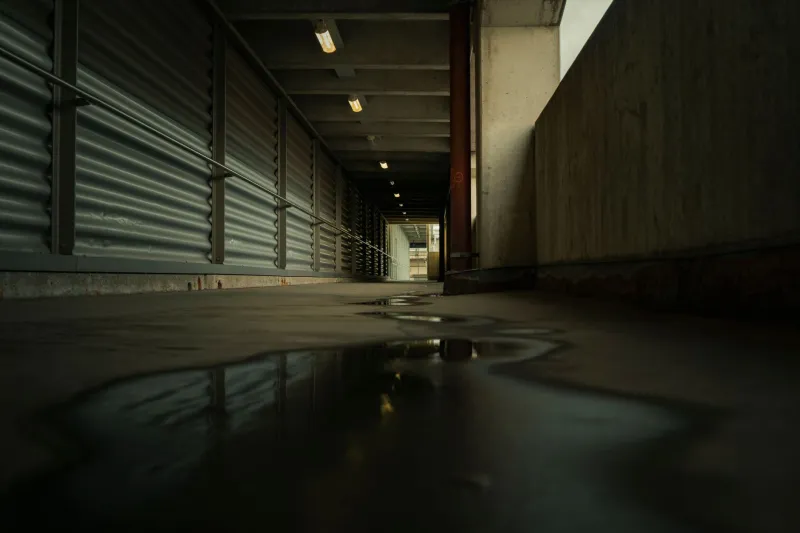
There is a moment, familiar to anyone who has worked through the small hours of the morning, when the building around you begins to feel less like a place and more like a presence. The fluorescent hum grows louder. The corridors stretch. And then, if you are unlucky enough to catch your own reflection in a mirror, a window, or the polished steel of an elevator door, you may notice something that stops you cold.
Your reflection is not keeping up with you.
It is a fraction of a second behind. Or perhaps a full second. Or perhaps — and this is the account that surfaces most frequently in late-night forums, overnight shift logs, and anonymous testimonies submitted to paranormal research groups across the United States — it continues to move after you have stopped.
The Accounts That Started the Conversation
The phenomenon is not new, but it has gained unsettling traction in recent years, particularly among those whose professional lives are lived in the margins of the night. Security guards stationed in empty office buildings. Hospital orderlies navigating long, mirror-lined corridors at 3 a.m. Hotel staff restocking supply closets behind the front desk long after the last guest has gone to bed.
One account, widely circulated on an overnight workers' community thread, came from a woman employed as a cleaning supervisor at a corporate headquarters in downtown Chicago. She described pausing in a hallway to check her hair in a mirror mounted near the fire exit. Her reflection, she wrote, was facing away from her. By the time she processed what she was seeing, it had turned back around — but slowly, she insisted, "like it had been caught doing something it wasn't supposed to."
A security guard at a distribution warehouse in rural Ohio submitted a similar account to a paranormal documentation group in 2021. He had been making his midnight rounds when he noticed his reflection in a long panel of tinted safety glass. He stopped walking. The reflection, he said, took two more steps before it stopped as well. He did not finish his shift that night.
These are not isolated anecdotes. They form a pattern — one that researchers, psychologists, and those with a darker appetite for the unknown have begun to take seriously.
What Science Offers — and Where It Falls Short
The clinical explanation begins with the brain. Sleep deprivation, which is an almost universal condition among overnight workers, degrades the visual processing centers responsible for temporal coherence — the brain's ability to stitch together a seamless, real-time image of the world. When the mind is running on insufficient rest, it can introduce micro-delays in how it interprets visual stimuli, particularly in low-contrast environments like dimly lit hallways or rooms bathed in the cold, flat light of after-hours fluorescents.
This phenomenon, sometimes referred to informally as visual temporal dissociation, can cause a person to perceive their own reflected movements as slightly out of sync. The mirror is not lying. The brain, exhausted and fraying at the edges, is simply processing the information late.
Psychologists who study shift-work disorders point to an additional factor: hyper-vigilant self-monitoring. When a person is alone in a large, quiet space for extended periods, they often become acutely aware of their own body and its movements. This heightened self-focus can paradoxically distort self-perception, making ordinary reflections feel strange, foreign, and threatening.
These are reasonable explanations. They are also, for many of the people who have experienced this phenomenon firsthand, profoundly unsatisfying.
The Detail That Doesn't Fit the Science
Sleep deprivation and perceptual distortion can account for a lag. They do not easily account for what several witnesses describe next: the reflection doing something the original body did not do at all.
A nurse working the overnight shift at a rehabilitation facility in rural Tennessee described watching her reflection in a bathroom mirror lift its hand toward the glass from the inside — while her own hands remained at her sides. A factory worker in Michigan reported that his reflection in a darkened window appeared to smile at him. He was not smiling. He was, by his own account, frozen in a posture of complete terror.
These embellishments — if that is what they are — follow a consistent narrative logic that is difficult to dismiss as pure hallucination. The reflection does not behave randomly. It behaves as though it is aware. As though it is testing the boundaries of the imitation it has been performing, and occasionally, in the loneliest hours, allowing the mask to slip.
The Mythology Beneath the Glass
Humans have always regarded mirrors with a measure of dread. The ancient Greeks believed reflective surfaces could trap the soul. Numerous folk traditions across cultures hold that mirrors must be covered during periods of mourning, lest the spirit of the deceased become confused and mistake its reflection for a doorway back to the living world. In American folklore, particularly in the rural South, there persists a belief that mirrors left uncovered at night become open corridors — passages through which something curious, something cold, might press its face and look.
Modern horror has done considerable work to keep these anxieties alive. But the accounts emerging from overnight workers carry a quality that fiction rarely captures: the grinding, procedural mundanity of the setting. These are not crumbling Victorian mansions. They are break rooms and parking garages and hospital supply closets. The horror arrives not in atmosphere but in interruption — a single wrong detail inserted into an otherwise ordinary moment.
That interruption is what makes these reports so difficult to set aside.
What Happens After
Perhaps the most consistent element across these accounts is not the initial sighting but the aftermath. Almost universally, those who have experienced a lagging or independent reflection describe a lasting unease around mirrors — particularly after dark, and particularly when alone. Several have reported covering mirrors in their homes. Some have requested reassignment to daytime shifts. A few have simply quit.
One woman, a hotel night auditor from Nevada who asked to remain anonymous, put it plainly in a written account she shared with this publication: "I don't think I saw a ghost. I don't think I was hallucinating. I think I saw something that had been pretending to be me for a very long time, and for just a moment, it forgot to keep pretending."
There is no clean resolution to offer here. The science provides a framework, not an answer. The folklore provides context, not comfort. What remains, when the clinical language and the cultural mythology are both set aside, is the raw, primal discomfort of the question itself.
If the reflection in the glass is not simply you — if something on the other side has been studying your movements long enough to replicate them almost perfectly — then every mirror you have ever stood before was never quite as private as you believed.
The darkest hour is near. And somewhere in the glass, something has been waiting for you to notice.