Witnessed in the Dark: The Strange Entities Watching Your Livestream at 3 A.M.
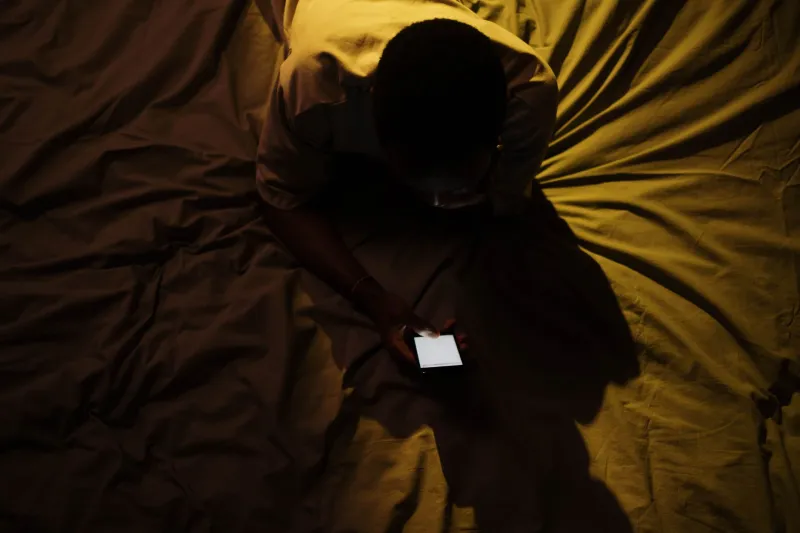
There is a particular kind of loneliness that belongs exclusively to the content creator broadcasting at three in the morning. The room is quiet. The camera light glows red. The chat window sits mostly still, populated by the scattered few who keep strange hours — insomniacs, night-shift workers, the restless and the lost. For many streamers, this is the appeal: an intimate audience, an unfiltered conversation, the illusion of speaking honestly into an empty room.
But some of those rooms, it turns out, are not quite empty.
Over the past several years, a growing number of American livestreamers have begun documenting a phenomenon that resists easy categorization. During broadcasts conducted between 2 and 4 A.M., certain accounts materialize in their chat windows — accounts that appear to have no history, no followers, no prior activity of any kind. They arrive silently, linger without commenting, and vanish before dawn. Others leave messages so cryptic or contextually precise that they unsettle the streamer in ways that linger long after the broadcast ends.
This is not a ghost story, at least not in the traditional sense. But it is something.
The Anatomy of a Strange Viewer
To understand what has been reported, it helps to understand how livestream chat functions. Platforms like Twitch, YouTube Live, and TikTok Live allow any registered user — or, in some cases, any visitor — to observe a broadcast in real time. Chat logs are often saved, and savvy streamers have taken to archiving their late-night sessions with increasing regularity, motivated in part by curiosity and in part by a creeping unease they struggle to articulate.
What these archives frequently reveal follows a recognizable pattern. Sometime after 2 A.M., accounts with algorithmically improbable usernames — strings of letters and numbers, or names that appear to reference specific personal details about the streamer — join the channel. They do not speak immediately. In many documented cases, they do not speak at all. They simply watch.
A streamer based in Portland, Oregon, who broadcasts ambient music and personal reflection sessions during the late hours, described one such account in a widely circulated Reddit post. The username was a seemingly random sequence of characters, but embedded within it was a fragment that matched her childhood nickname — one she had never mentioned on any public platform. The account joined at 3:07 A.M., remained for eleven minutes, and disappeared. It has not appeared since, and no record of it could be found on the platform when she attempted to search for it the following morning.
"I know there's probably a rational explanation," she wrote. "I just haven't found it yet."
When the Chat Speaks Back
Silent watchers are unnerving enough. More disturbing, according to those who have catalogued these encounters, are the accounts that do communicate — and do so in ways that suggest a level of awareness no algorithm should possess.
A Texas-based gaming streamer recounted an incident from a 3 A.M. session in which an unfamiliar account entered his chat and typed, with no prior context, the exact phrase his late father had used as a personal motto. He had never spoken about his father on stream. The account sent no other messages. When he attempted to click on the username to view the profile, the page returned an error indicating the account did not exist.
Similar accounts have emerged from communities dedicated to overnight ASMR content, late-night talk-style streams, and creative writing broadcasts. The comments left by these anomalous accounts tend to fall into one of three categories: deeply personal references the streamer cannot explain, fragmented phrases that read like corrupted text or partial sentences, or statements that seem to anticipate something the streamer is about to say or do.
None of these incidents, taken individually, constitutes proof of anything beyond coincidence or, in some cases, sophisticated trolling. Taken collectively, however, they form a pattern that researchers who study online behavior have begun to take seriously — if cautiously.
The Psychology of the Witching-Hour Audience
Dr. Marcus Hale, a behavioral psychologist who studies parasocial relationships and digital intimacy, has written about the particular vulnerability of the late-night streaming environment. "The hours between 2 and 5 A.M. represent a psychologically distinct state for most people," he noted in a 2023 paper on online social behavior. "Inhibitions are lowered, pattern recognition becomes heightened, and the mind is primed to assign meaning to ambiguous stimuli."
This observation cuts both ways. It suggests that streamers operating in those hours may be more susceptible to perceiving significance in ordinary events. But it also raises a more troubling possibility: that those hours attract a specific type of observer precisely because the streamer is less guarded, more candid, and broadcasting from a place of genuine emotional exposure.
Certain online communities have speculated that the late-night streaming window is deliberately targeted by bad actors — individuals or coordinated groups who use automated tools to locate and monitor vulnerable creators, harvesting personal information disclosed during unguarded moments and using it to craft the kind of precisely targeted, deeply unsettling comments that have been reported. This theory is plausible, and cybersecurity professionals have noted that the technical infrastructure for such activity is neither exotic nor expensive.
But it does not account for everything. It does not explain the accounts that leave no digital trace. It does not explain the usernames that seem to know things no data scraper should be able to surface.
What Watches When We Broadcast
There is a quality to the late-night internet that resists clinical description. Those who inhabit it regularly — the streamers, the insomniacs, the people who have nowhere else to be at 3 A.M. — speak of it in terms that border on the supernatural. The feed feels different. The silence between keystrokes has weight. The viewer count, even when it reads zero, does not always feel like zero.
Whether one attributes these experiences to sleep deprivation, the psychology of isolation, the genuine presence of malicious human observers, or something that sits uncomfortably between all three categories, the accounts accumulating across American streaming communities deserve more than dismissal.
Something is watching during those hours. It leaves traces in chat logs and in the memories of the people who encountered it. It arrives without announcement and departs without explanation. It seems, above all else, to be paying very close attention.
For the streamers who have met it, the camera light no longer feels quite so much like a beacon cutting through the dark. It feels, instead, like a window — and windows, as anyone who has stood before one at 3 A.M. understands, work in both directions.